Friday, October 14, 2011

thekerbau.com

The story of my apprenticeship continues in a forum I've created called thekerbau.com. Its purpose is to provide a more private place to discuss the needs of those of us who have to make things happen in the world. Clothes, grooming, ways to pamper ourselves, etc.

If you are bespeaking yourself a suit and would like a critique, start a thread!

So please, join me at thekerbau.com.

Tuesday, October 11, 2011

The non-fused welted pocket

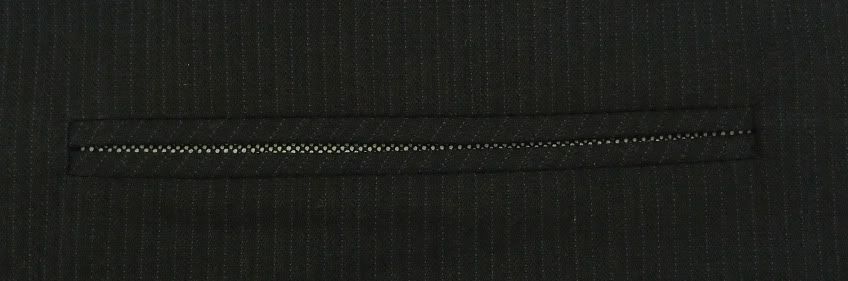
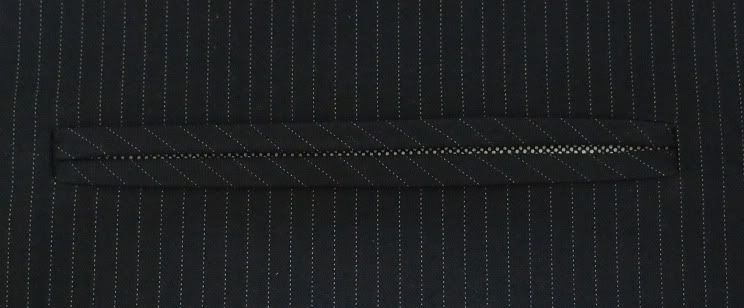
I made a welted pocket just now without any fusing whatsoever.


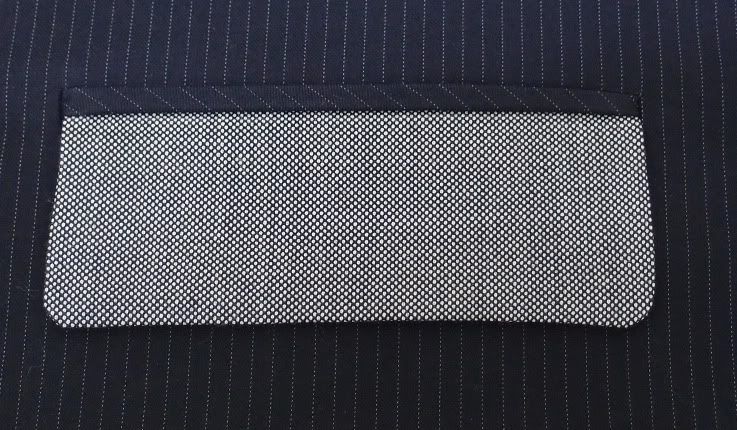
Compare it with this, also made by me, but with fused welts.

The fused pocket has thinner-looking and crisper welts. The non-fused pocket will not win anyone a tailoring competition. It does, however, feel very soft and natural.

I think I'll go with fused pockets but I'll use a very thin woven fusible.

Here is the non-fused pocket with the flap out.

Saturday, October 8, 2011

#2 Chinese Chef's Knife

Chinese chefs are known to use essentially only one knife, the choy dou (in Cantonese). The most popular size for the choy dou is the #2, which is 8" long as made by the best knife maker in Malaysia. Here is my well-used Brand 55 choy dou next to a brand new Japanese hand-forged gyuto.


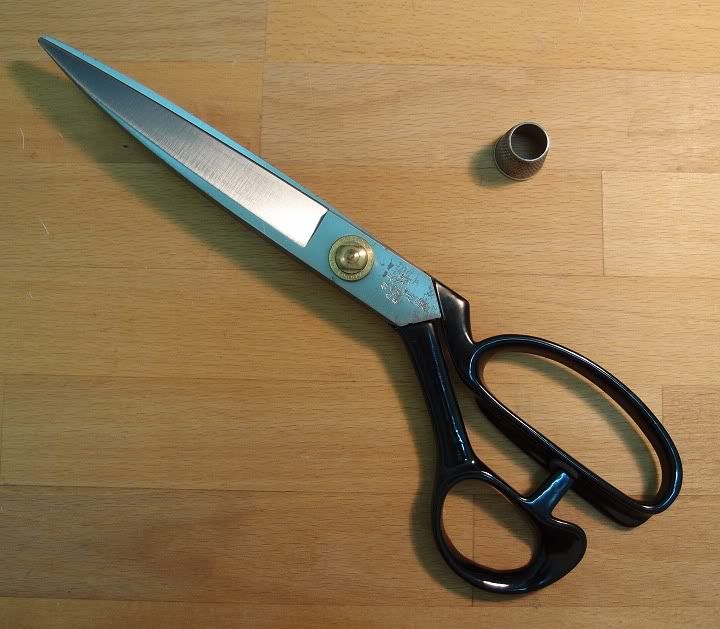
It turns out that Chinese coatmakers, too, use essentially only one pair of shears. My sifu uses an 11" Shozaburo for everything, from big cutting strokes like striking cloth to delicate cutting tasks like cutting the Y-prong in pockets to menial tasks like snipping thread at the sewing machine. He even uses his shears as tweezers, employing them to pick up and position small pieces of cloth. He can make a coat with just one pair of shears.

I am so glad that I bought a Shozaburo in the same size myself.

Another glimpse from the inside

It's fascinating being an insider in the bespoke tailoring industry. I'm so glad I'm in it, looking out, instead of being an outsider trying to peer in.

I took the other apprentice out for lunch. I learn that he is only 19. He told me he has over 600 friends on Facebook. "How many do you have?" he asked me.

"None," I replied. "I don't do Facebook."

His working hours are long. 9 a.m. to 7 p.m., Monday to Saturday.

"Before you came, there was another apprentice. He was very good. He got a job at another workshop," he told me.

It became clear to me that this apprentice did not speak English. He did not even know what the English word "tailor" meant. He has also never been to a tailor's shop. He probably doesn't own a suit. I've been at the workshop for three weekends, and for all three Saturdays he was wearing the same brown T-shirt.

"You said something about your parents being in tailoring?" I asked him.

"Yah, they make clothes."

"Why don't you learn from them? Why work for the sifu instead?" I asked.

"It's a different kind of make. Different price. The sifu's price is the most expensive in KL. So my parents say I should learn from him."

The Return of Full Canvassing

"Full canvassing is back in fashion again," proclaimed a cutter to my sifu.

This cutter had just entered the workshop. He is in his late fourties. The remarkable thing about him is that he is dressed like in the 80s. He wore obviously bespoke stuff, but the look was decidedly vintage. He even sported a moustache.

"Ah Wing has reason to come back now," he continued.

"Aiyah, Ah Wing is having the time of his life lah," said my sifu. "The guy is raking it in in London."

"They're paying a lot for full canvassing now. It's not like in the old days," said the cutter. "I was just over at the workshop of [a well know tailoring shop with a shopfront on Jln Maarof] and they have one there for the past 3 months and it's still not done, hahaha. Oh BTW, there is even demand for hand-made trousers now. They go for RMXXX. For trousers! [A well known tailoring shop in a very large shopping mall in Bandar Utama] charges that much for them."

"Sounds stupid to make trousers by hand," remarked my sifu.

"It's just the visible areas. Mostly decorative. The long seams and covered areas are still by machine," said the cutter.

Sunday, October 2, 2011

Jacket for a young man

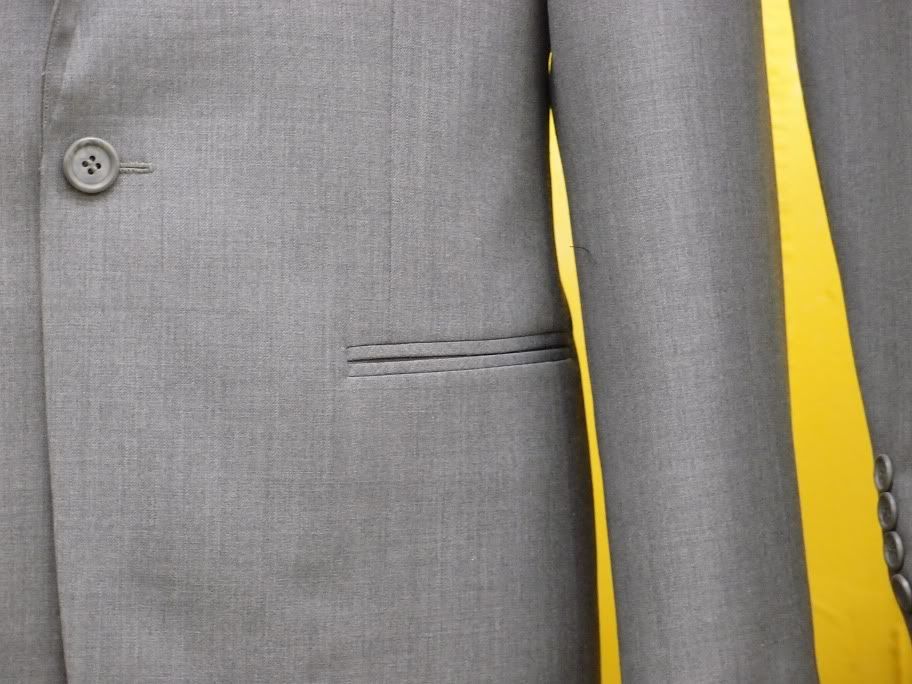
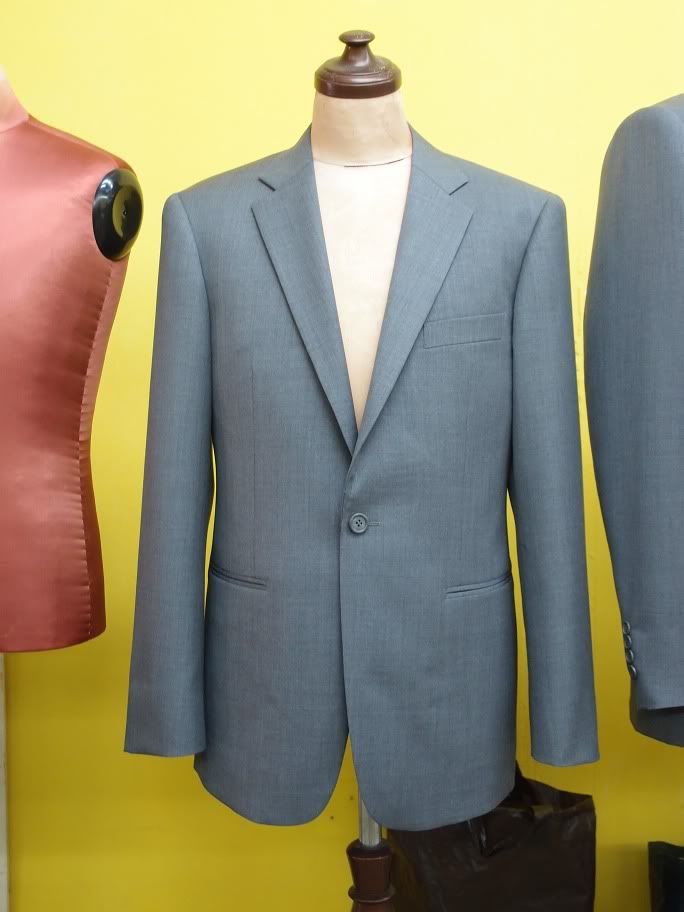
There was a job for two jackets in a (cheap) light grey wool in twill weave for a father and son. I find it such a great way of bonding. Looking at the jacket, the father is obviously corpulent with quite a gut. The son, however, is physically fit. Here I show the pictures of the son's jacket.


I think the sifu trimmed away a bit too much from the seam allowance that is wrapped by the welt. Hence the small gap between the welts.

I'm not an expert on evaluating sleeves, but that one there looks very fine. I hope the cutter pitched the sleeves right and got the curvature right. It would be a waste if such sleeves did not fit the customer (a very common problem).

The gorge is totally modern.

I see a conservative -- even boring -- cut that is typical of RTW jackets. If the jacket actually fits the customer the visual impact is considerable. However, I have higher expectations of bespoke. I would have expected more quirkiness, more idiosyncracy, more character. And above all more waist suppression.

Saturday, October 1, 2011

Keeping pockets in perspective

My sifu said that pockets are not that important in the general scheme of things. "You need to have pockets, but people do not choose you over others because of your pockets."

So I asked him what was truly important, if pockets weren't.

"How the jacket fits, how it rounds out his proportions," he replied.

The RM 60,000 suit

I thought I misheard him. "You mean 6,000 ringgit?" I asked.

"No, sixty thousand ringgit," replied the sifu.

This is hard to believe. My sifu had just told me that he was once given a job -- the coat portion, of course -- for a suit that costed the customer RM60K. I asked him who the cutter was. The answer was enlightening. (But I can't tell you.)

"But even suits that cost 10K to 12K are not as uncommon as people might think," he said.

I was taught to make welted flapped cross pockets today. The sifu also troubleshooted my homework pockets. Turns out the gaping can be eliminated by a certain technique.

I have a dislike for the fusible he uses for the welts. They are these stiff white non-woven fusibles. So I asked him if it absolutely has to be fusibles like these. He said of course not. "Once upon a time we did not fuse the welts. We just use a cotton muslin to give it some substance. The reason we use fusing is because it is more convenient." The sifu said he will make me a pocket in the old way so that I may experience the difference in feel.

The sifu pointed to me a jacket made by his partner's side of operations (which consists of another old sifu and three Banglas). "Notice how the quarters kick out?"

"Now look at my jackets." The quarters curled towards the wearer's crotch.

Later, he supervised me as I made a pocket flap. I pressed it, and it came out overpressed. The sifu seemed indifferent to the problem. So I asked him, "Don't you think I overpressed it?"

"What? Noooo.." he replied.

"I think I did. Look, it is lifeless and limp," I said.

"You are very perceptive. So many people cannot tell the difference. They just press the thing and are not in tune to the subtilities of the cloth. Look at the flap I made for you. Pressed just right, no?"

Indeed it was.

"I can't give you any guidelines here. It's about feel," he said.

Friday, September 30, 2011

Not too hideous

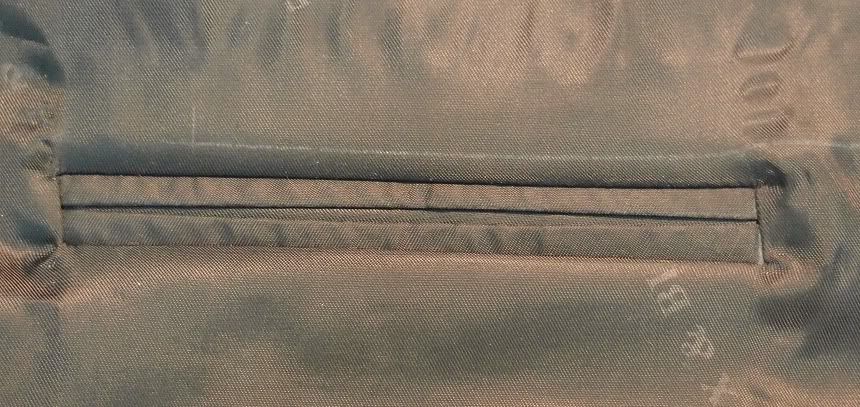
This is the fourth inner pocket I made as part of my homework. Still some issues to be sorted out with the sifu like the slight gaping. The sewing has to be essentially perfect with pockets such as these, and therein lies my biggest problem.

Saturday, September 24, 2011

My first lesson

"How long do you think it will take?" the stooped bespectacled partner of my sifu asked. "One year?"

"Longer," replied my sifu. They were talking about how long my apprenticeship will last.

The first task given to me was sewing long seams. "In tailoring, you have to use technique to compensate for the shortcomings of equipment and materials," remarked my sifu. "The feed mechanism of the sewing machine causes the two pieces of cloth to have different lengths once sewn up. That's why you have to keep the bottom piece taut and the top piece easy." So that's what's causing all my machine sewing woes.

By my seventh long seam, I asked him if it's OK to put this much tension on the cloth while I sew. "You have to develop your own technique. Everyone does it differently. Everyone eventually finds their own way of doing it."


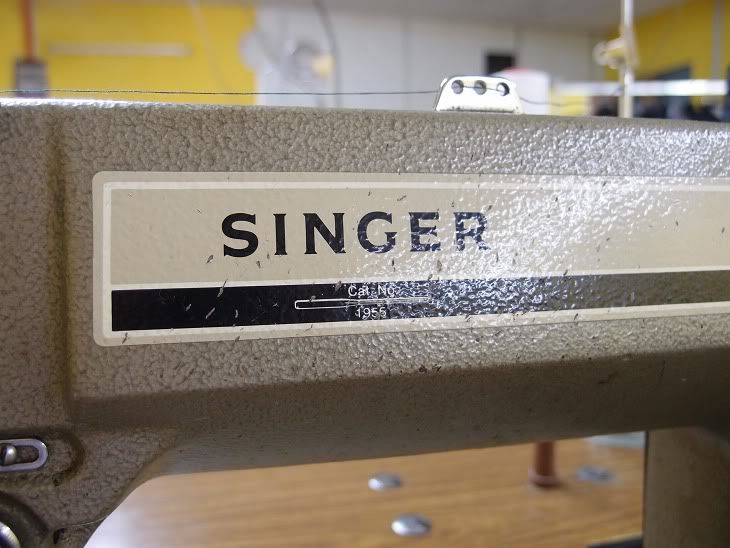
(The machine I used today)

Controlling the speed of an industrial sewing machine is extremely tricky. Everything about it is optimized for the professional sewer. I imagine it's like trying to drive a F1 car.

After lunch, he showed me how to make "lei toi", the inner jacket pockets. I watched in amazement as he made one in 5 minutes or so, may God have mercy upon me.


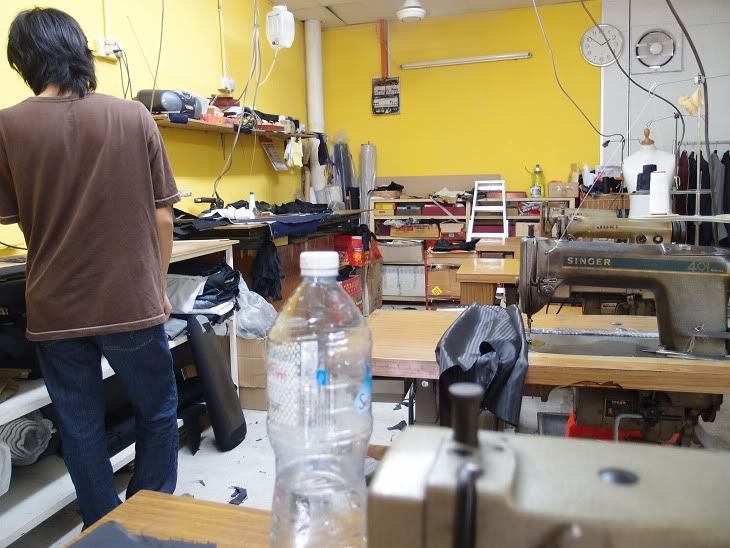
(The other full-time apprentice. He always gets scolded by the sifu.)

By the time I left at 4:30 p.m. I have made 3 welted inner pockets, and all three were wretched. I have come to the conclusion that I cannot make these pockets with his technique. I need more "scaffolding" -- some basting stitches to hold pieces together instead of three pieces of cloth held together merely by the pressure of a fingertip, use of glass-head pins to position cloth, use of chalkmarks to help me feed them accurately through the F1 machine, etc. The sifu uses almost no chalk marks. He uses no pins. He even echews the ruler. Everything is by sight and feel. The guy is crazy.

BTW it is clear the sifu is a wonderful teacher. This first session was really good.

Tuesday, September 20, 2011

The conversation with the sifu

Sifu is a Cantonese word for a master tradesman. It is somehow common to refer to coatmakers simply as sifu in this part of the world. A less flattering term would be tai sam lo, literally "suit guy".

He met me at the hawker center in the same row as his workshop where I was having breakfast. I had called him to say I have arrived and will come up in 15 minutes after breakfast. He said he'll come down and meet me.

He is a man in his 60s, plump with a mild smiling face. We did the usual orienting conversation: what I do for a living, what background I have in tailoring, why I want to learn coatmaking and such. I made some reference to Savile Row in my conversation, and he told me he went to London a few months back.

He said he was offered a job in a Chinese tailoring den in London, and that the reason he went there was to see the place for himself. He said the money was great by Malaysian standards, that the tailors there live in one bedroom apartments, and that the Chinese tailors basically lived together in the same block. He would have gone, he said, but his wife was against it.

I had all sorts of complex emotions go through me when I climbed the staircase and saw his workshop. It was very large, with perhaps 20 sewing machines. An old man, stooped and bespectacled, was bent over a pattern he was drafting. There were two or three Bangladeshis on one side of the large room. On another side was a young woman and a young man, both at the sewing machine. I believe the young woman is his daughter. He told me while I was eating that his daughter, a graphic designer, has taken a renewed interest in tailoring. The young man is probably a school leaver who is now a full-time apprentice.

He said he shares the workshop with a partner of his who runs his own operations.

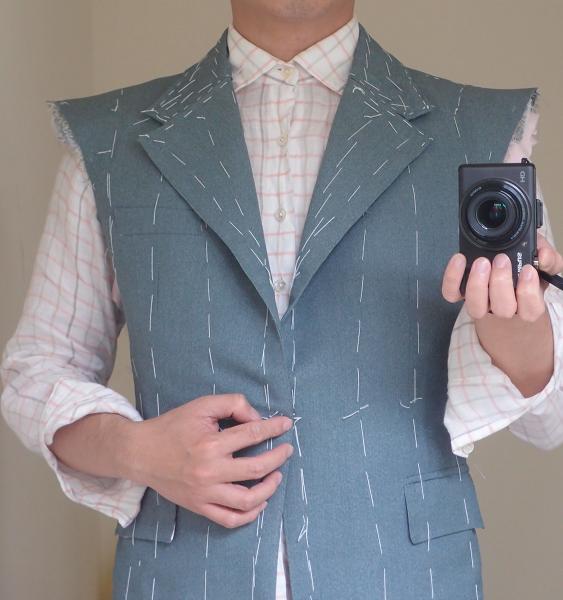
I showed him TG#4. By this time, three cutters have already been shown TG#4. The first, MBT, was interested but not too impressed. After the undercollar and topcollar were inserted, the other two cutters saw it and basically said very good things about my level of determination and potential.

The sifu was amazed by TG#4. He thought it improbable that someone with absolutely no tailoring background could produce something like this by self-instruction. He also remarked that concave shoulders were something many tailors are ignorant about. At this point, our conversation became animated and he was convival.

He showed the garment to the old man who was drafting a pattern. He looked it up and down, and especially the shoulders and said that just being able to draft the pattern was an accomplishment.

The sifu named his price. For a considerable sum of money, half of which is to be paid up front, he will teach me coatmaking. I asked him what he meant by teaching me coatmaking. What do I get for the money? He said he will be there for me until I become a competent coatmaker myself. I agreed on the spot. He became even more animated after that.

Sunday, September 18, 2011

A new development

I am not sure if I will have the opportunity to finish TG#4. This is because I am now an apprentice with a local coatmaker. I'm supposed to spend my Saturdays in his workshop learning coatmaking.

Anyway I shall continue posting here what I have learnt.

Saturday, September 10, 2011

Meet FCDB

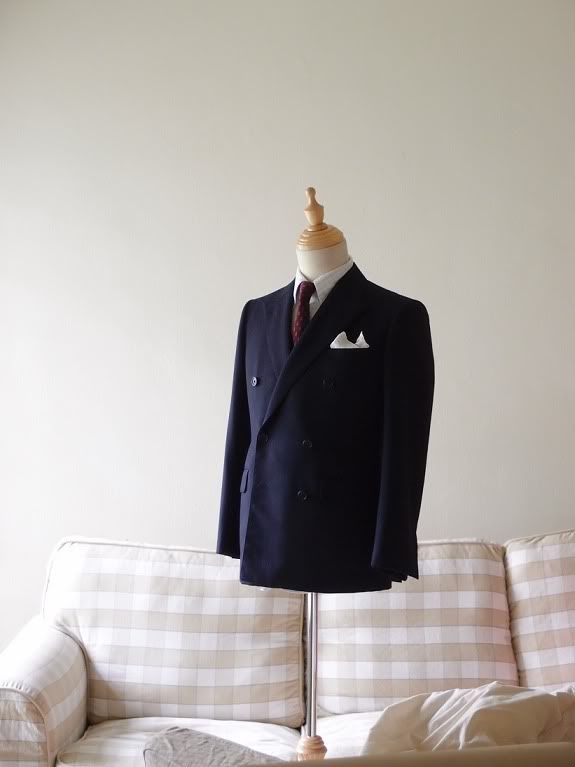
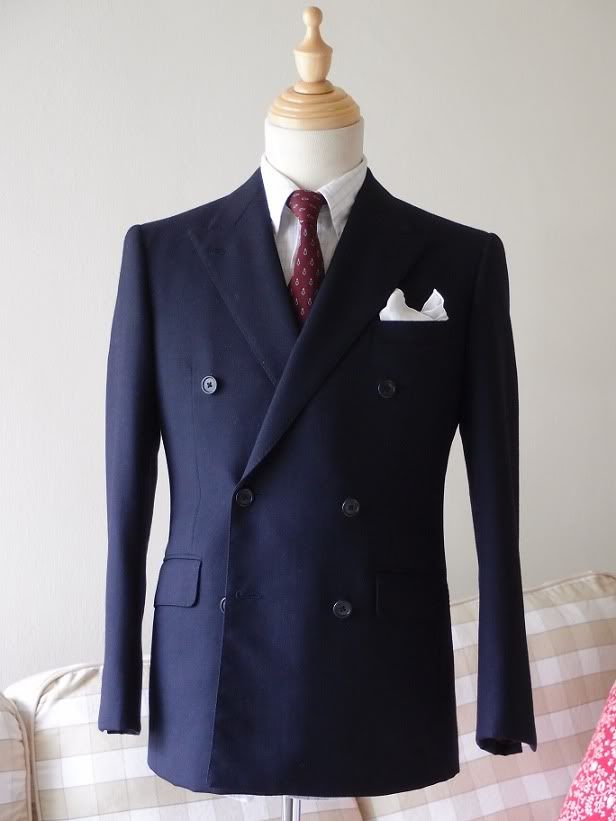
This is a suit I had made by my usual tailor about a year ago. It was his first fully canvassed jacket in many decades, and it was only through much coaxing from me and the trust we have built up over three other jackets and numerous shirts and odd trousers that he agreed to make this for me.


I have nicknamed this FCDB, standing for fully canvassed double breasted. I have shown this DB to two other bespoke tailors and they were both floored by the quality. It will take me many, many jackets before I can wield cloth like this coatmaker.

Tuesday, September 6, 2011

No.1 as a DB? I think not.


I'm pretty sure after seeing the illustration above that No. 1 should be a single breasted.

Saturday, September 3, 2011

The Topcollar: Both sides now

The Topcollar

Now I have to do the other side...

Yukibane threads

It is actually impossible to source good threads in KL. Even the tailor's trimmings supplier I went to had nothing good. The market leader seems to be Rinata, a spun polyester that is wooly, hairy and shit. It is so shit I cannot believe tailors would endure working with it everyday.

I had to buy Gütermann online. Tera 180 for my shirts and for No. 1 I bought a spool of Mara 120. The Mara and Tera range of threads use continuous core polyester, which is essentially very, very long staple polyester. The thread is smooth (not hairy), has a soft sheen to it, and very strong.

But what I found at Daiso exceeded all my expectations. For RM5, you get a 200m spool of Yukibane thread, which is the glossiest, smoothest polyester thread I've seen. I believe it is resin coated. I can't buy enough of this stuff.


Friday, September 2, 2011

Collar shape finalized

After months of having an oversized blobby undercollar, TG#4 has had its undercollar trimmed to its final shape. It is in cutting things like the undercollar that you appreciate a pair of astonishingly sharp shears like the Shozaburo most. The undercollar is thick and tough, and has gentle curves. A lesser pair of shears would have rendered the edge less precise.


Thursday, September 1, 2011

Undercollar crossstitched to the necksyce

Both shoulders have now been finalized. I padded the undercollar to about 70%, leaving unpadded portions for later. The undercollar was then cross stitched to the necksyce.


I really love the way the collar hugs the neck. I can do anything I want yet the collar remains glued to the neck!


Wednesday, August 31, 2011

Finalizing the shoulders

Up until now, the shoulder seams have merely been basted together (with a backstitch) and the shoulder pads basted in provisionally.

I spent the afternoon "making up" one shoulder. It took me 3 hours. For a single shoulder.

The shoulder seam was opened up, the seam redrawn with a sharp chalk, a strip of lining material basted to one side of the seam, and the seam sewn permanently with the machine. Then the shoulder pad is permanently basted to the canvas. Thereafter the lining is made to cover the pad and basted in place.

See if you can tell the difference. One shoulder has been finalized and the other not.


I need to clean my window.